In collaboration with us, Raynet implemented a comprehensive transformation that connected key organizational components:
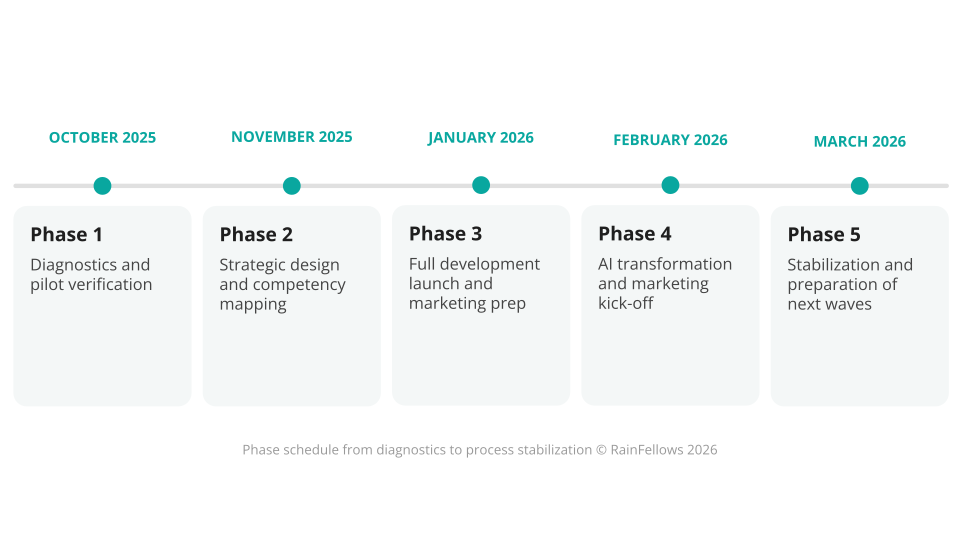
- Complete transition to an agile framework LeSS (Large-Scale Scrum) in R&D (January 2026).
- Widespread adoption AI tools within the JetBrains IntelliJ environment (February 2026) beyond the circle of R&D enthusiasts.
- Marketing: Reorganization from specialized silos into a single agile, cross-functional acquisition team operating in 14-day sprints, with the parallel separation of product marketing (February 2026).
Real business results
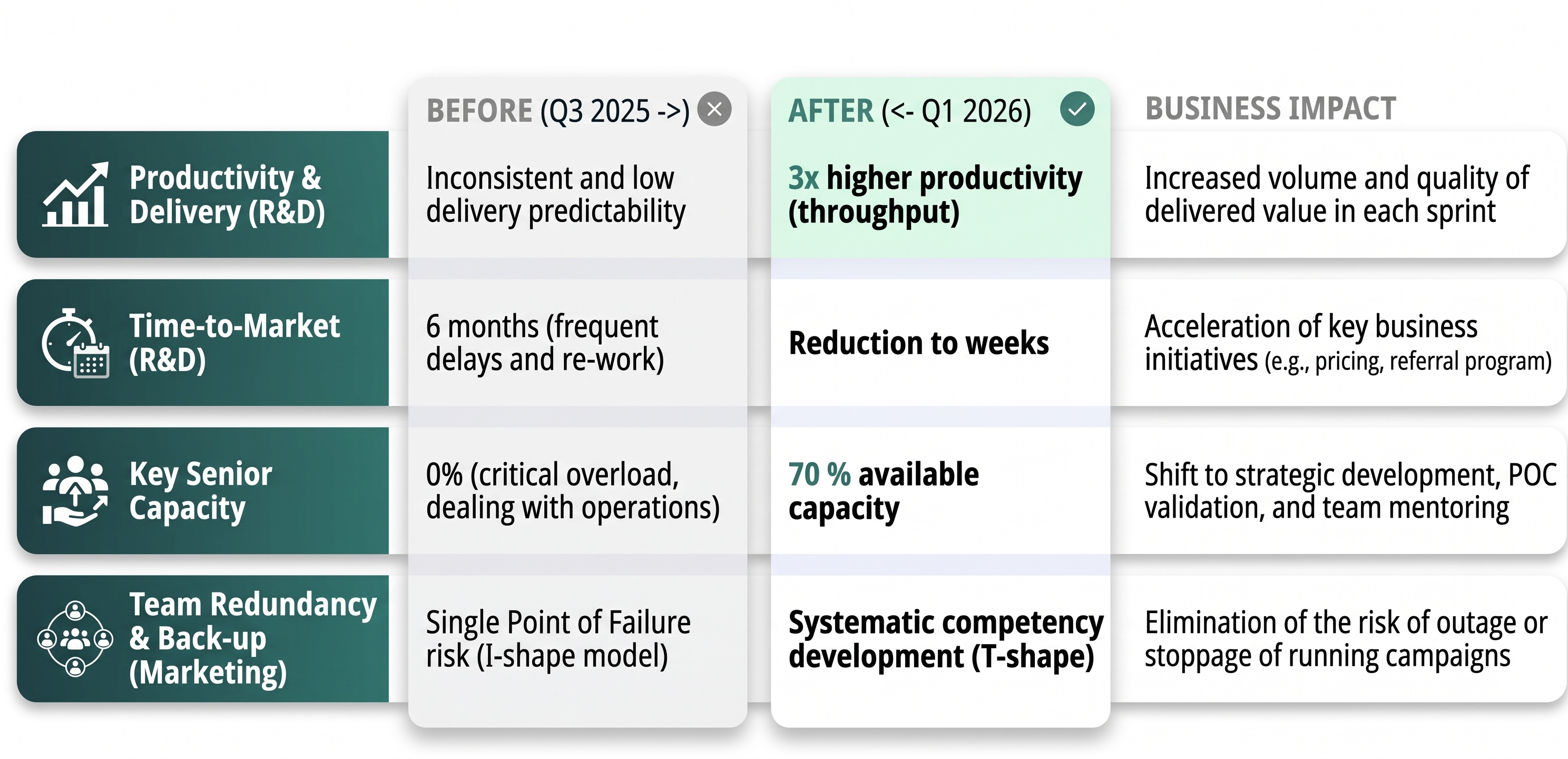
3x higher R&D productivity: Overall development team productivity tripled after transitioning to the new model. Complex product units (e.g., key Price Increase or Referral agendas) can now be delivered by teams in weeks rather than the previous months.
70% capacity release for senior experts: Key architects and leaders have been freed from micromanagement and development team operations. They now allocate this capacity to strategic technological development (Proof of Concepts, architecture).
Eliminating "Hero Culture" risks: Responsibility for analysis, quality, and delivery has shifted from individual key specialists to three long-term stable, cross-functional, and fully interchangeable teams.
Initial state and organizational challenges
Before the transformation, Raynet's structure hit the limits of its centralized organization and asynchronous processes:
- Development overload and inefficient planning: R&D capacities were consistently planned at approximately 150% of actual capabilities. This led to delivery delays and the overloading of key personnel.
- Specialized silos in marketing: Marketing was divided into narrow specializations (PPC, brand, graphics, events). The creative team (graphics, video) functioned as an internal service unit, which created a critical bottleneck. There was a tendency to prioritize "perfection" (so-called gold-plating) over actual business impact (leads/conversions).
- Asynchronous priority alignment: Aligning priorities between development, marketing, and sales at the start of the quarter typically took up to two weeks of asynchronous clarification, which paralyzed execution and generated inefficient "topic ambushes" between R&D and marketing.
"Waste first" principle: eliminating waste before deploying AI
The fundamental prerequisite for a successful technological and process transformation was to first optimize the process flow itself and eliminate waste.
- In R&D: Developers stopped acting as passive executors of detailed specifications. They took full end-to-end responsibility for analysis and refinement, which freed up capacity for architects. AI was only deployed after the task flow had been optimized.
- In marketing: Constant context switching for creatives was eliminated. Strict adherence to perfectionism for short-term content was abandoned in favor of a "Good Enough" rule to increase delivery speed.
Chronological progress of the transformation
The transformation took place in parallel across both the development and marketing branches under unified methodological leadership:
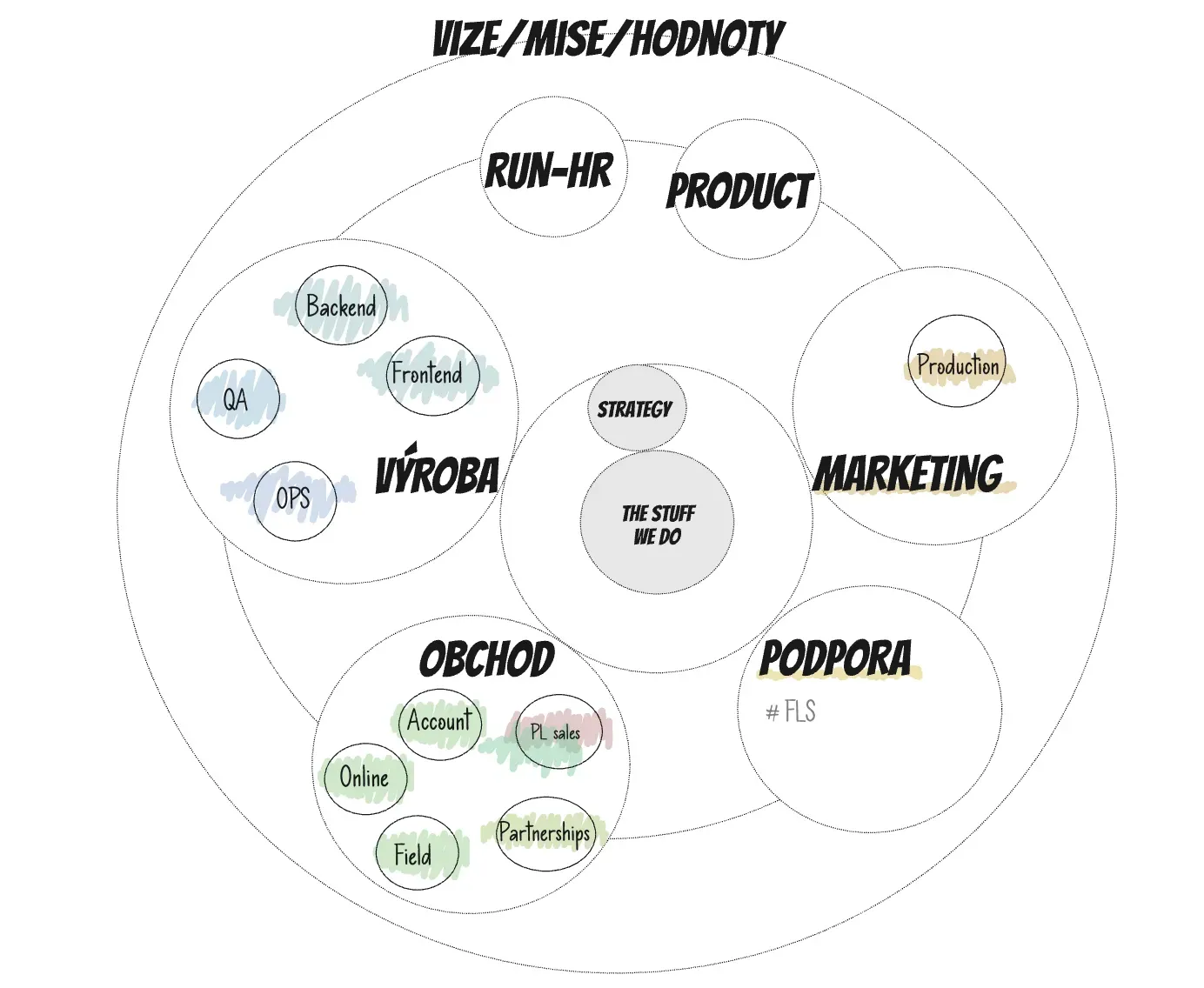
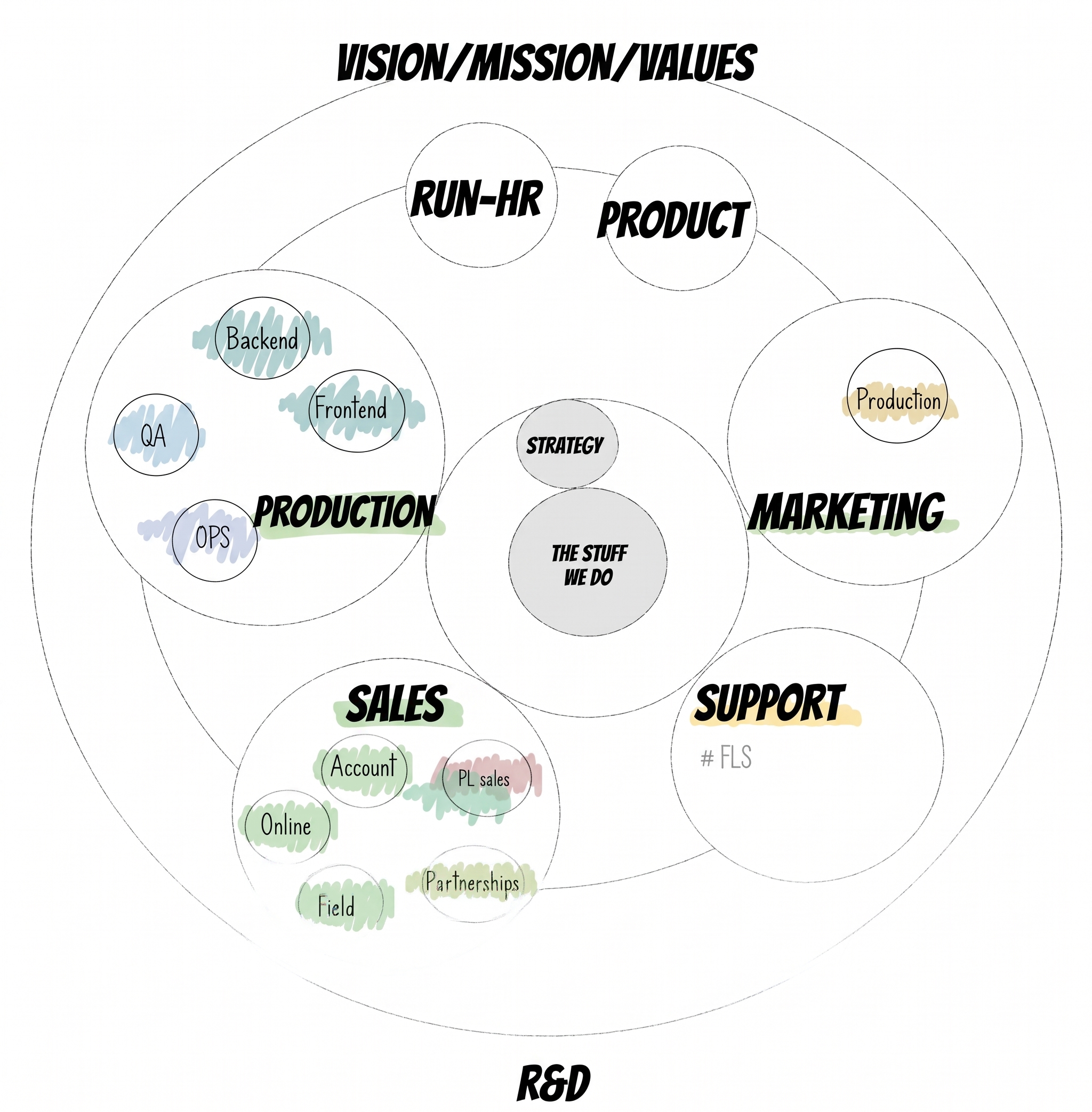
New organizational structure for production and marketing
The new structure completely dismantled specialized silos and established clear interfaces between delivery, product strategy, and the platform.
The role of leaders and the development of autonomous management
A key factor in the success of the transformation was a fundamental change in the behavior of managers and senior architects:
- Stepping back from execution: Seniors and leaders consciously stepped back from the teams' day-to-day decision-making. They stopped acting as arbiters of technical solutions and micromanagers of tasks.
- The role of mentors and coaches: Their primary focus shifted to defining technology strategy, removing systemic obstacles, and supporting the professional development of more junior colleagues.
- Embracing calculated risk: Leaders managed to overcome their protective instincts. They allowed teams to conduct their own analyses and take responsibility for mistakes, which was a necessary step toward building true autonomy.
What's next: upcoming steps and development waves
Following the successful anchoring of agile principles within R&D and marketing, Raynet is now focusing on integrating the entire company and streamlining support processes as part of its "Ever Evolving Enterprise" strategy (a company capable of continuously adapting, innovating, and responding to market changes):
A) Launching QBR (Quarterly Business Review) as an integration engine
Connecting agile development and agile marketing into a single company-wide flow is currently being implemented through the introduction of the QBR process. This will serve as a synchronization "Meta-Sprint" for the entire organization (90+ people):
- Eliminating asynchronous "bottlenecks": Preventing situations where development delays collided with fixed marketing campaign deadlines. The QBR transparently visualizes dependencies on the very first day of planning.
- One-day synchronization event: The morning will be dedicated to presenting the business vision, demos of completed product increments, and marketplace topics. The afternoon will feature parallel planning of cross-functional team priorities and a cross-team retrospective to clarify dependencies.
- Outcome-based planning (Outcome vs. Output): Transitioning to measuring real business impact on the customer based on an 80/20 capacity model (80% fixed priorities, 20% flexible capacity for agile responses).
B) Launching the HR / People Ops transformation
Following changes in the product teams, an HR department transformation is underway, aiming to adapt Agile ways of working in HR and Ops—just as in Marketing—to ensure consistent operations across the entire company.
C) Deployment of AI "Value Maximizer" assistants
- Pilot testing of dedicated AI agents for team leads and product managers. The goal is to leverage AI to more accurately define quarterly objectives and automatically translate the product roadmap into structured tasks.